Top 10 Shocking Defenestrations (People thrown from windows)
History is full of strange and violent moments, but few are as bizarre—and impactful—as defenestrations, where people were literally thrown out of windows. While it may sound almost unbelievable today, these dramatic acts were once a serious form of political punishment and protest in Europe.
Some of the most shocking defenestrations didn’t just end in injuries or deaths—they changed the course of entire nations. In fact, certain incidents directly triggered major wars, reshaping European history for decades.
From the streets of medieval Prague to the halls of royal castles, power struggles often turned brutal, and windows became unexpected weapons of political conflict.
In this list, we explore the Top 10 Shocking Defenestrations (People thrown from windows), uncovering how these dramatic events escalated tensions and led to some of the most important conflicts in history.
Related: Here are 10 Incredible Firsts in the Evolution of Life on Earth
Definition of Defenestration
Defenestration is the act of throwing someone out of a window. The word comes from the Latin de- (out of) and fenestra (window).
Historical meaning
In history, defenestration was often used as a political or symbolic act, especially in medieval Europe. It wasn’t just an accident—it was sometimes done during protests, revolts, or power struggles to remove officials or enemies.
Modern usage
Today, the term is mostly used in:
- History discussions (especially Prague events)
- Political language (metaphor for removing leaders)
- Academic writing
Simple meaning
Defenestration = “Throwing someone out of a window” (literally or historically)
1. First Defenestration of Prague (1419)
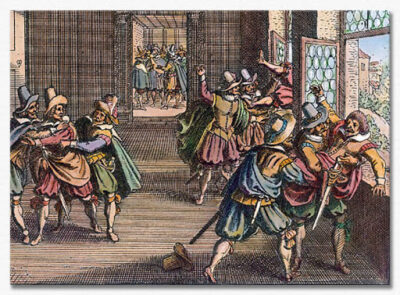
The First Defenestration of Prague is one of the earliest and most important events in European political history, marking a turning point that pushed Bohemia into years of religious and political conflict.
It took place on July 30, 1419, in the city of Prague, at a time when tensions were rising between the followers of religious reformer Jan Hus and the Catholic authorities of the Holy Roman Empire. The Hussite movement, inspired by Hus’s teachings, demanded religious reform, fairness, and an end to corruption within the Church.
The event at New Town Hall
On that day, a group of Hussite protesters, led by radical preacher Jan Želivský, gathered in Prague and marched toward the New Town Hall. They were angry over the imprisonment of Hussite supporters and the growing oppression of their movement.
When negotiations with the city council failed, the crowd stormed the building. In a sudden burst of violence, several city officials were seized and thrown out of the windows of the town hall.
Immediate consequences
The act shocked the city and sent a wave of fear and anger throughout Bohemia. King Wenceslaus IV reportedly died shortly afterward, and political stability collapsed rapidly.
This violent moment is widely recognized as the starting point of the Hussite Wars, a series of religious and civil conflicts that lasted for years and deeply affected Central European history.
Historical importance
The First Defenestration of Prague is significant because it shows how religious tension and political frustration can escalate into direct violence. It was not just an act of rebellion—it was a trigger that led to a prolonged war between reformers and imperial forces.
2. Second Defenestration of Prague (1618)
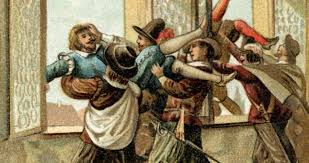
The Second Defenestration of Prague is the most historically significant and widely known defenestration event in world history. It took place on May 23, 1618, at Prague Castle in Bohemia (modern-day Czech Republic), during a period of intense religious and political tension between Protestants and Catholic rulers of the Holy Roman Empire.
At the time, Protestant nobles were increasingly frustrated with the Catholic Habsburg monarchy, accusing them of violating religious freedoms that had been previously promised. This anger reached a breaking point when Protestant representatives confronted two Catholic royal governors—Jaroslav Bořita of Martinice and Vilém Slavata of Chlum—along with their secretary.
In a dramatic and violent moment, the Protestant nobles seized all three officials and threw them out of a high castle window.
The shocking twist
What made this event even more legendary is the fact that the men survived the fall, landing in a pile of manure and soft ground below the castle. Despite surviving, the symbolic impact of the act was far more powerful than the physical damage.
Why it mattered so much
This single act of political violence did not remain an isolated incident. Instead, it rapidly escalated tensions across Europe and directly triggered the outbreak of the Thirty Years’ War (1618–1648)—one of the deadliest and most destructive conflicts in European history.
3. Early Roman Political Executions (circa 365 AD)
Reports of early Roman political executions involving defenestration-like methods are not as clearly documented as later European cases, but ancient historical accounts do suggest that extreme forms of punishment were sometimes used during periods of political instability in the Roman Empire.
Around the mid-4th century, during the rule of emperors like Valentinian I, the Roman state was dealing with internal corruption, military pressure, and frequent power struggles between officials and generals. In such a tense environment, punishment for betrayal or treason could be swift and extremely brutal.
Some historical writings and later interpretations describe cases where officials accused of corruption or disloyalty were executed in ways that may have included being thrown from heights—such as towers, cliffs, or possibly palace structures. However, it is important to note that direct evidence specifically confirming “defenestration” in the modern sense is limited for this period.
Why historians still discuss it
Even if exact window-throwing incidents are debated, the Roman Empire is often included in discussions of defenestration history because it demonstrates a key idea:
political power in ancient Rome was often enforced through fear, public punishment, and dramatic executions.
This environment laid the foundation for later European political traditions where removing rivals in violent, symbolic ways became part of power struggles.
Historical importance
What makes this period relevant to the theme of shocking defenestrations that sparked wars is not a single confirmed event, but rather the culture of political brutality. Rome helped establish the idea that authority could be enforced through extreme and visible punishment, a concept that later appeared in medieval Europe in more documented defenestration events.
Related: Here are 10 Important Events in the United States
4. Byzantine Palace Purges
The Byzantine Empire was known for its wealth, culture, and military strength—but behind the golden image of Constantinople’s palaces, politics were often extremely dangerous. Power struggles inside the imperial court frequently turned violent, especially when emperors felt threatened by generals, ministers, or rival nobles.
Although historical records are not always precise, many chroniclers describe a political environment where betrayal was often punished without trial. In some cases, officials were reportedly killed in brutal ways, including being thrown from high palace structures or executed near windows and balconies.
Why palace windows mattered symbolically
In Byzantine political culture, the palace was not just a home—it was the center of absolute authority. Being removed from the palace (especially in a public or violent way) symbolized complete loss of favor and power. Acts of pushing or throwing someone from elevated structures were therefore both practical executions and symbolic political messages.
Why it is linked to defenestration history
Even though not all cases are fully verified as literal “window defenestrations,” the Byzantine Empire is often included in discussions of early political violence because it shows:
- Constant internal coups and betrayals
- Rapid removal of political rivals
- A culture where punishment was immediate and public
Historical importance
The Byzantine example helps explain how political violence evolved in Europe. It created a pattern where rulers used dramatic and visible punishments to maintain control—an idea that later reappeared in more documented defenestration events in medieval Europe.
5. Italian City-State Conflicts (Medieval Era)
During the Middle Ages, Italy was not a unified country but a collection of powerful and competing city-states such as Florence, Venice, Milan, and others. These cities were constantly struggling for control, wealth, and political influence.
Because of this intense rivalry, politics inside these cities could become extremely violent. Noble families and political factions often fought for dominance, and when tensions exploded, public uprisings were not uncommon.
Power struggles inside city palaces
In several Italian city-states, government buildings served as both political centers and battlegrounds. When rival factions seized control, defeated officials were sometimes humiliated, imprisoned, or killed. In extreme cases, historical accounts suggest that individuals were thrown from windows or high palace openings during violent coups or mob uprisings.
Even when exact details are debated, what is clear is that:
- Political conflicts were often settled with force
- Public buildings became sites of punishment
- Leadership changes could happen violently and suddenly
Why Italy is important in defenestration history
Italian city-states are frequently mentioned in discussions of defenestration-like events because they represent a period where:
- Political loyalty was fragile
- Rival families controlled government power
- Violence was a common tool for political change
This environment helped normalize the idea that removing a political enemy could be done quickly and dramatically, sometimes in very public ways.
Historical importance
These medieval conflicts show how unstable politics shaped Europe long before modern governments existed. They also help explain why later events—like the famous Prague defenestrations—had such explosive consequences. Europe was already familiar with the idea that political disputes could turn physical in an instant.
6. Ottoman Court Intrigues (16th–17th Century)
The Ottoman Empire during the 16th and 17th centuries was one of the most powerful empires in the world, stretching across Southeast Europe, Western Asia, and North Africa. However, behind its strength and expansion, the imperial court in Constantinople (modern-day Istanbul) was also known for intense political rivalry and dangerous power struggles.
The Ottoman political system placed enormous power in the hands of the Sultan, but this also meant that high-ranking officials, viziers, and military leaders could rise and fall very quickly. When political favor changed, consequences were often severe.
Power struggles inside the palace
Historical accounts describe a court culture where betrayal, suspicion, and sudden political removals were common. While the most documented punishments involved execution by strangulation or exile, some narratives and secondary reports suggest that extreme methods of elimination were also used during palace purges, including violent removals from elevated palace areas or balconies in moments of chaos.
However, it is important to note that clear, verified cases of “defenestration” in the strict European sense are not strongly documented in Ottoman records. Instead, the empire is included in discussions of political violence because of the broader pattern of rapid, often brutal removal of powerful officials.
Why it still matters in history
Even without confirmed window-throwing incidents, the Ottoman court is significant in the wider story of shocking defenestrations that sparked wars because it reflects:
- Extreme political instability at the top level
- Sudden removal of officials without formal trials
- A culture where palace spaces could become sites of violence
Historical importance
The Ottoman example shows how political power in large empires often depended on survival within a dangerous court system. While not always involving literal defenestration, the environment was consistent with the same idea: power could be lost instantly, sometimes in dramatic and violent ways.
7. French Revolution Mob Violence (Late 18th Century)
The French Revolution (1789–1799) was one of the most transformative periods in world history. It began as a movement against monarchy and inequality but quickly escalated into widespread political chaos, violence, and mass executions.
During this period, Paris became the center of revolutionary anger. Crowds of revolutionaries often targeted nobles, government officials, and anyone associated with the old royal system.
Violence in revolutionary Paris
While the French Revolution is most famous for the guillotine, mob violence also played a major role in how people were punished. In moments of extreme unrest, some individuals were attacked in streets, homes, and public buildings. There are accounts of victims being dragged from buildings, beaten, and in chaotic situations, thrown or forced from upper floors during riots.
These acts were not organized “defenestrations” in the medieval sense like Prague, but they reflect the same idea: political anger turning into sudden, violent removal of authority figures from power—and sometimes from buildings.
Why it mattered historically
The French Revolution completely reshaped Europe. It led to:
- The fall of the French monarchy
- The rise of radical political factions
- Widespread wars across Europe (including the Napoleonic Wars)
The violence of the streets symbolized a deeper collapse of old political order.
Historical importance
This period is important in the context of events that started wars because it shows how political frustration can escalate beyond control. Even though defenestration was not a formal method used by revolutionaries, the chaotic mob actions reflect the same historical theme: removal of power through violent public action.
8. Prague Revolutions (1848)
The year 1848 is often called the “Year of Revolutions” in Europe, and Prague was no exception. At that time, the city was part of the Austrian Empire, where growing nationalist movements and demands for political reform were spreading rapidly across different regions.
In Prague, tensions between Czech nationalists and imperial authorities escalated into protests, demonstrations, and armed clashes. Citizens were demanding greater autonomy, freedom of speech, and political rights, while the empire attempted to maintain strict control.
Violence during unrest
During the chaos of the 1848 uprisings, violent confrontations occurred in the streets and around key government buildings. While this period did not produce a single well-documented “window defenestration” event like those of 1419 or 1618, historical accounts describe intense riots where officials were attacked, chased from buildings, and in some cases thrown from elevated positions during mob violence.
Why it matters in defenestration history
Even if symbolic rather than formal, the Prague revolutions are often included in broader discussions of political defenestration incidents because they reflect the same recurring theme:
- Political anger turning into physical confrontation
- Public buildings becoming centers of conflict
- Authority being violently challenged during uprisings
Historical importance
The 1848 revolutions were part of a wider European wave that reshaped political systems across the continent. In Prague, they strengthened Czech national identity and contributed to long-term political change, even though immediate goals were not fully achieved.
9. Symbolic Defenestrations in Modern Politics
In modern times, the word “defenestration” is rarely used to describe literal violence. Instead, it has taken on a symbolic political meaning, referring to the sudden removal or forced resignation of powerful leaders.
Politicians, CEOs, and public figures are often described as being “defenestrated” when they are:
- Ousted from office
- Forced to resign under pressure
- Removed by internal political struggle
From windows to politics
Unlike medieval Europe, modern political systems do not involve physical violence in leadership changes. However, the dramatic spirit of defenestration survives in language. When a leader loses power suddenly, especially after scandal or rebellion within their own party, journalists sometimes use the term metaphorically.
Why the term still survives
The survival of the word shows how powerful historical events can shape modern language. The original defenestrations in Prague became so famous that they turned into a lasting symbol of:
- Political rebellion
- Forced removal of authority
- Sudden collapse of power
Historical importance
Symbolic defenestration highlights how history continues to influence modern political vocabulary. Even though the act is no longer physical, the idea of “throwing out” a leader remains a strong metaphor for political change.
10. Legacy of Defenestration in World History
The history of defenestration is more than just a collection of shocking stories—it is a reflection of how political conflict has evolved over centuries. From medieval Europe to modern political language, the concept has left a lasting impact on history, culture, and even diplomacy.
A symbol of political crisis
The most famous events, especially the First and Second Defenestrations of Prague, are remembered not just for their violence but for their consequences. These incidents helped trigger major wars, including the Hussite Wars and the Thirty Years’ War, reshaping the political map of Europe.
Pattern in history
Across different regions and eras, a common pattern emerges:
- Political tension builds up
- Authority is challenged violently
- Symbolic or physical removal of leaders takes place
- Larger conflicts or wars often follow
This is why defenestration is often studied not just as an event, but as a warning sign of deeper instability.
Cultural and historical impact
Today, defenestration is remembered in:
- European historical studies
- Political science discussions
- Cultural references and metaphors
- Educational history narratives
It remains one of the most unusual yet meaningful symbols of political rebellion in world history.
Final reflection
From Prague castles to revolutionary streets, defenestration represents a moment where politics turned physical. While modern governments no longer use such extreme methods, the historical memory remains powerful—reminding us how quickly political tension can escalate when dialogue fails.
Related Here: Top 10 Cities With Highest Rape Crimes in America
Frequently Asked Questions (FAQ)
1. What is defenestration in history?
Defenestration means throwing someone out of a window. In history, it was often used as a form of political protest, punishment, or symbolic rebellion, especially in medieval Europe.
2. Why are the Prague defenestrations so famous?
The First (1419) and Second (1618) Defenestrations of Prague are famous because they were not just violent incidents—they directly contributed to major wars like the Hussite Wars and the Thirty Years’ War.
3. Did defenestrations really start wars?
Yes, in some cases. The Second Defenestration of Prague (1618) is widely considered the trigger that started the Thirty Years’ War, one of the deadliest conflicts in European history.
4. Who was thrown in the Second Defenestration of Prague?
Two Catholic officials, Jaroslav Bořita of Martinice and Vilém Slavata of Chlum, along with their secretary, were thrown out of a castle window—but they surprisingly survived the fall.
5. What was the First Defenestration of Prague?
It happened in 1419, when Hussite protesters threw several city officials out of the New Town Hall in Prague. This event marked the beginning of the Hussite Wars.
6. Is defenestration still used today?
Not literally. Today, “defenestration” is mostly used as a political metaphor meaning the forced removal or resignation of a leader.
7. Why did defenestrations happen in Europe?
They usually happened due to:
- Religious conflicts
- Political corruption
- Power struggles
- Public anger against rulers
8. Which defenestration is the most important in world history?
The Second Defenestration of Prague (1618) is considered the most important because it directly led to the Thirty Years’ War, which reshaped Europe.